African Safari Vacation Packages: What Actually Matters
Search “African safari vacation packages“, and you’ll get thousands of near-identical results — glossy photos of lions at sunset, the same handful of stock phrases, and prices that seem to bear no relation to what’s actually included. The wildlife will be extraordinary wherever you book. What separates a trip you’ll talk about for years from one you’ll barely remember comes down to a shorter list of decisions than most agencies let on.
Here’s what’s actually worth your attention.
Timing Decides More Than People Realise
Most operators will tell you the dry season, late June through October, is the best time to travel. True, but it undersells how much that window shapes the experience. Grass stays low, animals cluster around remaining water sources, and dawn game drives in the Masai Mara through August can look almost choreographed — lions are a few metres from the vehicle, and cheetahs teach cubs to stalk in the early light. The wildebeest migration crosses from Tanzania into Kenya between July and September, and if that’s the reason you’re travelling, your dates aren’t really negotiable.
For UK travellers this window overlaps with the summer holidays, so demand — and price — climbs accordingly. If you have any flexibility, November and late January are quieter and considerably cheaper, and the wildlife viewing is still excellent. The grass grows taller and skies can turn grey, but plenty of repeat visitors actually prefer this shoulder season.
What “Package” Really Means
The headline price on safari tour packages rarely tells you what you’re buying. The detail that matters most is the game drive structure: how many hours a day and how many people share the vehicle. A Land Cruiser carrying seven or eight guests is a different trip entirely from one carrying four — the wait for everyone to reposition for a photo, the noise, and the compromise on where you stop.
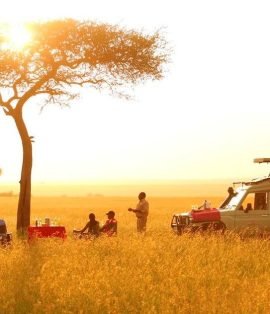
Accommodation gets misrepresented just as often. Star ratings tell you almost nothing. A tented camp inside or right on the boundary of a reserve — canvas walls, genuine darkness, something moving past camp at 2am — tends to stay with you far longer than a lodge with a pool forty minutes from the park gate. Price doesn’t reliably signal which you’re getting, so read the itinerary itself, not just the marketing copy around it.
Why Where the Operator Sits Matters
Most UK-facing safari companies are aggregators, building itineraries around subcontracted local operators. That adds a layer of distance between you and the people who actually know the parks — which camp changed management, which guide is worth requesting by name, and which property photographs beautifully and disappoints in person.
Creeks Tours and Travel works on the ground across the Masai Mara, Amboseli, Samburu and Tsavo, handling both private itineraries and group departures. That distinction matters if your trip has specific requirements rather than a fixed template to slot into. Talking to a travel agent based in Kenya, rather than one reading the same lodge descriptions you can find yourself, tends to produce a far more accurate trip — and it’s a big part of proper African safari planning.
Choosing Where to Go
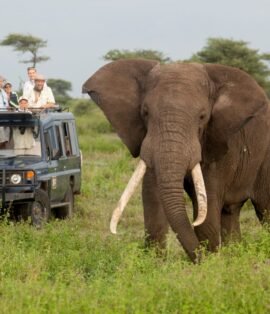
Kenya alone has more than a dozen credible destinations, but a few keep coming up for good reason. The Masai Mara is where most first-timers start, and the density of wildlife justifies the reputation. Amboseli gives you elephant herds set against Kilimanjaro on a clear morning – a view that stays unreal no matter how many photos you’ve already seen of it. Samburu, further north, is drier and wilder, home to species you won’t see further south: Grevy’s zebra, reticulated giraffe, and Somali ostrich. Worth considering if you’ve already done the Mara.
For a first trip, a circuit combining two or three parks over seven to ten days gives you real variety without wearing you out with constant movement.
Before You Book
Light aircraft transfers between camps enforce strict weight limits, usually 15 kg in a soft bag — checked, but not suggested. Pack with that in mind.
Get out early. The two hours after dawn consistently produce the best sightings, and a driver who knows where the pride was last night beats one who ambles out at eight with no urgency. Private conservancies on park boundaries often permit night drives and walking safaris, both banned inside most national parks — worth factoring into where you stay.
If working through all this feels like a lot, that’s normal; the variables genuinely stack. Creek Tours and Travel plan directly on the ground rather than relaying itineraries through a UK office, which tends to mean faster answers and a trip built around what you actually want — not what happens to be easiest to package. Among African safari vacation packages, that ground-level knowledge is usually the difference you notice once you’re out in the vehicle.