Best Safari Packages in Kenya: What UK Travellers Need to Know
Most people spend more time choosing a restaurant for a Saturday night than they do picking the best safari packages for a trip that’ll cost several thousand pounds and use up most of their annual leave. The result, too often, is a holiday that looked brilliant in the brochure and felt flat the moment the vehicle pulled away from the lodge.
Kenya is genuinely one of the best places in the world to go on safari. That’s not a marketing line — it’s just true. But the difference between a trip you’ll talk about for twenty years and one you’d quietly rather forget comes down to decisions most people don’t know to make until they’ve already booked.
Here’s what actually matters.
What the price doesn’t tell you
The headline cost on any safari package tells you almost nothing useful. What matters is what’s inside it. How many game drives per day? Are you in a shared vehicle with ten strangers or a private 4×4 where the guide can stay at a sighting when everyone else leaves? What’s the maximum number of passengers per vehicle?
These details have a bigger impact on your trip than the lodge star rating. A guide who positions the vehicle well, knows which direction the predators were moving at dawn, and actually engages with your questions — that’s the difference between a good game drive and an exceptional one. No comparison site tells you which operator has those guides.
Accommodation matters too, though not in the way most packages suggest. A tented camp inside the Masai Mara — canvas walls, sounds of wildlife at 2am, nothing between you and the bush — will outlast any memory of a hotel-style lodge forty minutes from the action. The price doesn’t always predict which you’re getting.
When you go changes everything
The single most practical piece of advice about Kenya safaris is also the one that gets ignored most. Timing matters more than almost anything else. Kenya in the dry season — July to October, and again from January to March — is a different experience from the same parks in the wet months. Animals concentrate around shrinking water sources when it hasn’t rained, which makes sightings far more reliable. You’re not guaranteed a lion, but you’re not spending three-hour drives staring at tall grass hoping something moves.
For UK travellers, there’s a useful coincidence: the July-to-October dry season lines up almost exactly with school summer holidays. Prices reflect that. If you have diary flexibility, November and April are genuinely excellent windows — quieter parks, lower rates, and the bush has a green quality that photographs beautifully. You trade some predictability with weather for considerably more space.
Why Kenya makes sense for first-time safari-goers
There are excellent tours and travel companies in Kenya across East Africa, but Kenya has a particular logic for first-timers. The infrastructure is well-developed, the parks are accessible, and the wildlife density across Amboseli, the Masai Mara, and Samburu is as good as anywhere on the continent.
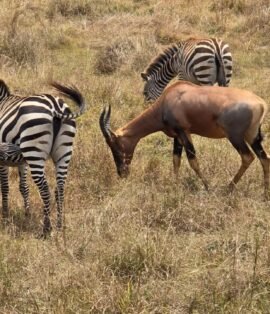
Samburu deserves a mention on its own. It has species you won’t see anywhere further south — the reticulated giraffe, Grevy’s zebra, and Somali ostrich. Most first-time visitors don’t know to ask for it. A good travel agent in Kenya will suggest it; a package on a comparison site won’t.
What a good travel agency actually does differently
Most UK-based booking platforms subcontract their safaris to Kenyan operators anyway. You’re paying for a layer of branding and an extra margin. Booking directly with a ground-level travel agency in Kenya means you’re talking to people who run the vehicles, choose the camps, and know which properties just changed management or which guide has been exceptional this year. That’s not information that appears on any review site.
Creeks Tours and Travel is one of the travel agencies in Kenya with that kind of ground-level knowledge. They handle both private and group safari itineraries for UK travellers and are worth a conversation before you commit to anything — Creeks Tours and Travel.
Four things worth knowing before you book
Luggage limits on light aircraft transfers are strict. Many of the best safari packages include small-plane hops between camps, and those aircraft enforce weight limits of around 15kg in a soft bag. They won’t bend this rule at the airstrip. A compact bag with the right kit beats a large suitcase with everything you might need.
The first two hours after sunrise are almost always the best for game. Ask any tour agent in Kenya worth speaking to how early morning drives operate before you confirm. A guide who knows where the action was overnight and gets you there before the light goes flat is worth considerably more than one who starts at 8am.
Where possible, book accommodation inside the park or in a private conservancy directly adjacent to it. Conservancies outside national park boundaries often allow night drives and walking safaris that standard parks don’t permit. They can also be better value than they look on paper.
If the process feels complicated, that’s because it genuinely is. A good travel agent won’t just send you a grid of packages to click through — they’ll ask questions that help you figure out what you actually want. A trip built around your real dates, your group, and your priorities will outlast one chosen from a dropdown. That’s the difference.
Planning your first Kenya itinerary
A workable first visit might look like this: two or three days in Amboseli for elephants and the open landscape beneath Kilimanjaro, then three days minimum in the Masai Mara. Seven to ten days in total is a solid window. Under five days and you’ll spend more time travelling between parks than you will in them.
If you’re going July to October, the Mara should anchor the trip. The wildebeest migration during those months — the Mara River crossings, the crocodiles, the big cats that follow the herds — is the kind of thing that’s genuinely difficult to describe without sounding like you’re overselling it. You’re not.
For the best safari packages matched to your specific dates and budget, Creeks Tours and Travel are worth speaking to before you commit to anything else: creekstours.com.