An hour with mountain gorillas is one of the most moving wildlife experiences in the world. Uganda's permit costs $800 and Rwanda's $1,500. Here's how the two compare on cost, difficulty, access and atmosphere, and what actually happens on trek day.
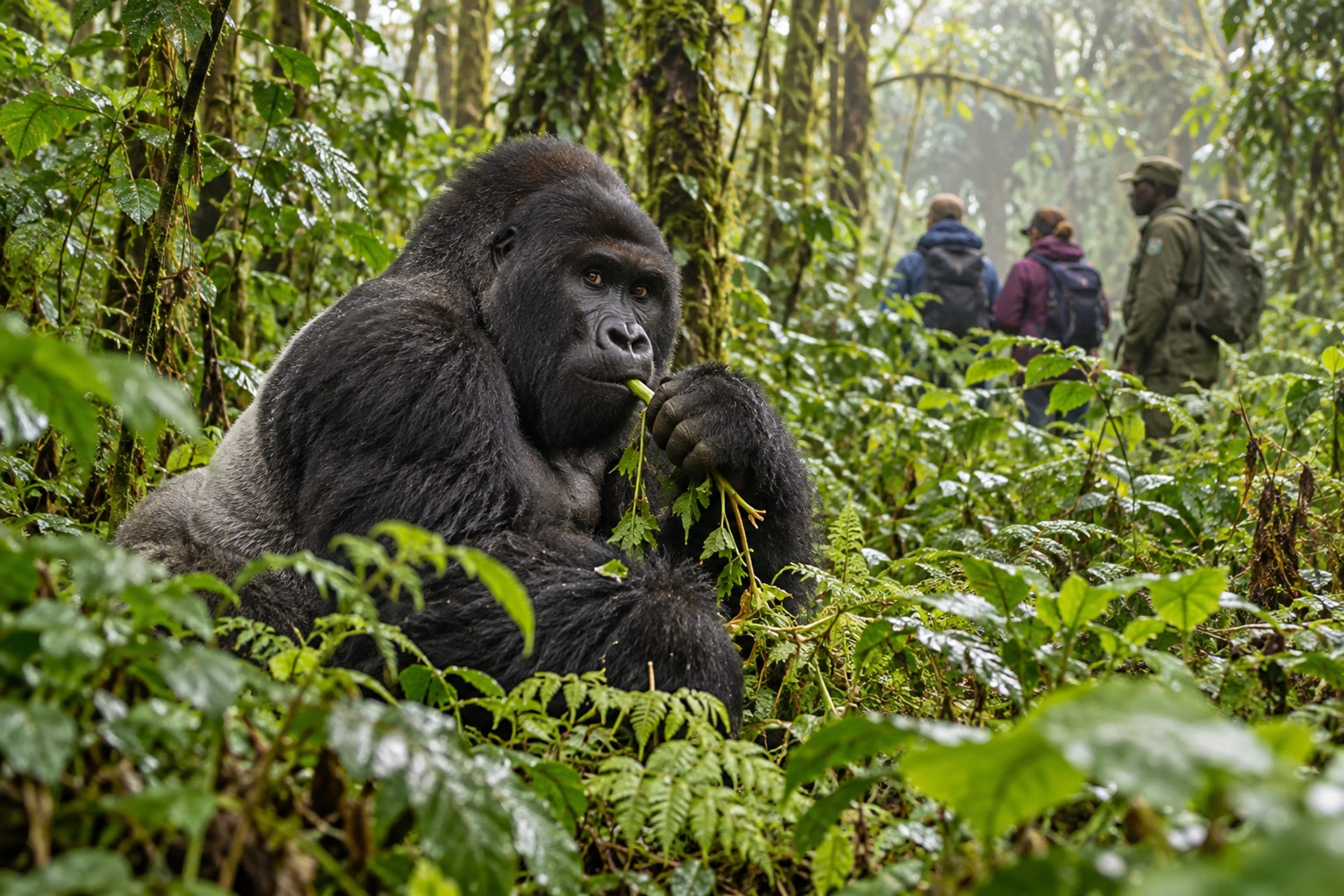
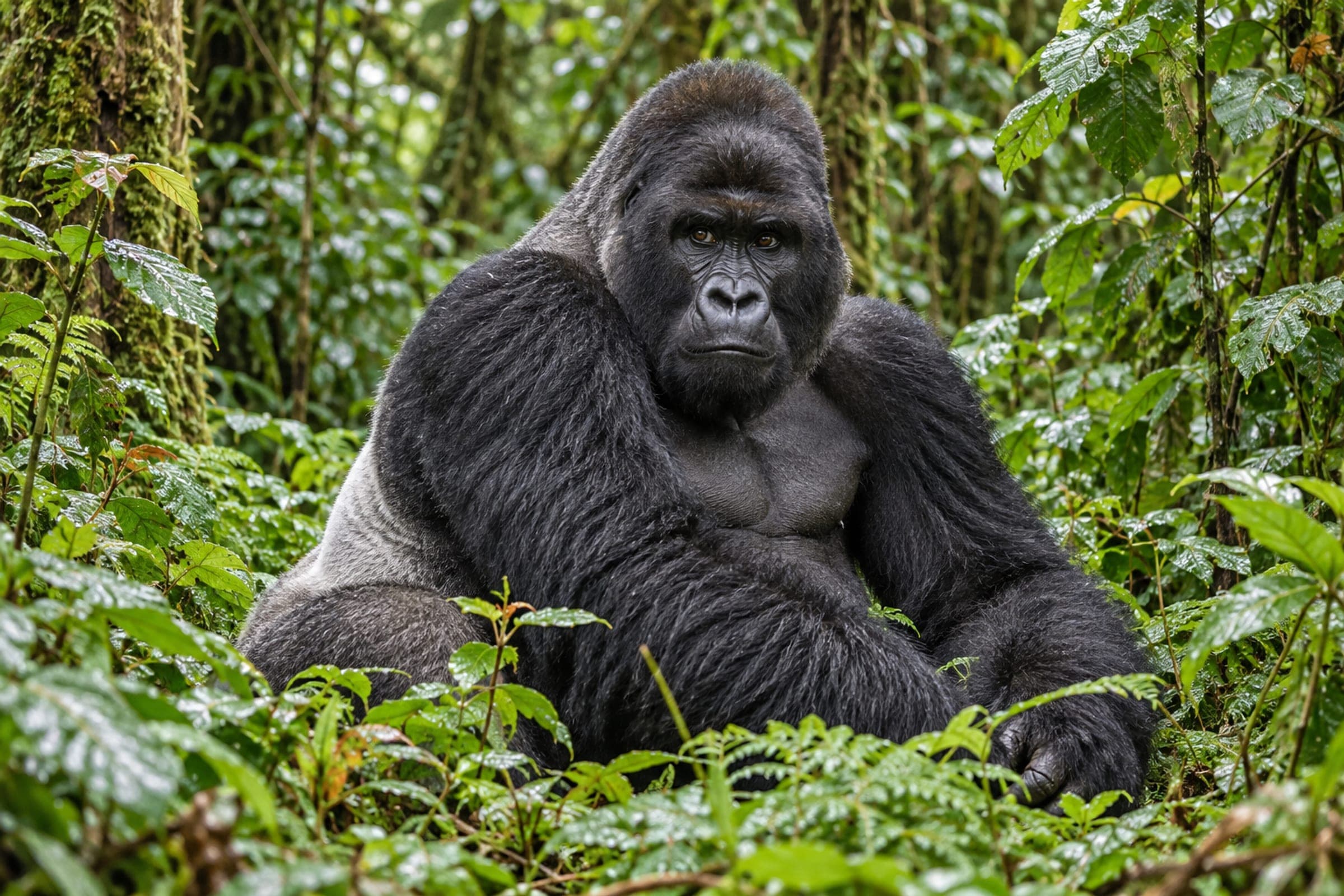
Nobody forgets their first gorilla. You've climbed for an hour or two through dense forest, wet to the knees, with your heart pounding. Then the tracker raises a hand, the leaves part, and a silverback is sitting six metres away, pulling stems from a bamboo shoot and paying no attention to you at all. A juvenile tumbles out of a tree. A mother pulls her infant closer. For one hour, you're a quiet guest in their family.
There are only around 1,000 mountain gorillas left on Earth, all of them in the Virunga volcanoes (shared by Uganda, Rwanda and the DR Congo) and Uganda's Bwindi forest. Every permit you buy funds the rangers, vets and local communities who brought them back from the brink.
Uganda vs Rwanda at a glance
| At a glance | Uganda · Bwindi | Rwanda · Volcanoes |
|---|---|---|
| Permit (foreign visitor) | $800 per person | $1,500 per person |
| Gorilla population | Bwindi holds around half of the world's mountain gorillas | Part of the Virunga population, shared with Uganda and DRC |
| Getting there | 8–9 hrs by road from Entebbe, a domestic flight, or about 4–5 hrs from Kigali to southern Bwindi | 2–3 hrs by road from Kigali |
| Terrain | Steep, dense rainforest, 1,160–2,600 m | Bamboo and volcanic slopes, often 2,500–3,000 m+ |
| Other wildlife | Tree-climbing lions, Kazinga Channel, chimpanzees | Golden monkeys, Akagera's Big Five, Nyungwe's chimps |
| Best for | Value, longer trips, combining with a classic safari | Short trips, top-end lodges, easy logistics |
How hard is gorilla trekking?
The honest answer: it depends on where the gorillas are that morning. Trackers set out at dawn to find each family's nest from the night before, and you're assigned to a family at the briefing. A trek can take 45 minutes or five hours.
Bwindi is called 'impenetrable' for good reason: steep ridges, thick undergrowth and slippery paths. The altitude is lower than in Rwanda, but the gradients can be tough. Rangers will match you to an easier family if you ask at the briefing.
Treks start through farmland, then climb into bamboo and forest on the volcano slopes. Trails are often more open, but the altitude (frequently above 2,500 m) makes you breathe hard. Families closer to the park edge mean shorter walks.
What happens on trek day
- 1Around 7:00 amBriefing at park headquarters
You check in with your permit and passport, watch traditional dancers (in Rwanda), and get your briefing. Rangers assign groups of no more than eight visitors to each gorilla family.
- 28:00 am onwardsInto the forest
Your ranger guide leads the group while trackers ahead radio in the family's position. Armed rangers walk with you for protection from forest elephants and buffalo. It's a precaution, and rarely needed.
- 3When you find themYour hour with the gorillas
You leave bags and walking sticks with the porters and move in quietly. You have exactly one hour, keeping about 7 metres away (the gorillas don't always follow that rule). Watch, photograph without flash, and keep your voice low.
- 4AfternoonWalk out and celebrate
The descent always feels quicker. Back at the gate you receive a certificate. Most travellers spend the evening telling the story over and over.
Rules that protect the gorillas
Children under 15 can't trek. Families with younger children can visit primate sanctuaries or do a community walk instead.
Gorillas share 98% of our DNA and catch our illnesses. If you have a cold or fever, rangers can stop you trekking, and they're right to.
Strict limits keep stress low for the gorillas. It's why permits are limited, and why they sell out.
Gorilla permit prices compared
What's habituation? In Bwindi's southern sector you can join researchers and trackers for four hours with a gorilla family that's still getting used to people. It costs more, but it's the deepest gorilla experience available anywhere.
Booking your permit
Permits are limited, so book 4–6 months ahead for June–September and the Christmas holidays, and 2–3 months ahead at other times. Permits are issued by the national parks authorities through licensed operators. We secure them for our guests as soon as dates are confirmed, and build the trip, lodges and transfers around the permit date.
The dry seasons mean firmer trails and easier hiking. The forests are wet all year, though, so gorilla trekking works in any month.
Waterproof hiking boots, long trousers tucked into socks (for ants), a rain jacket, gardening gloves for gripping vines, and a light daypack with water.
Make it a bigger journey
Gorillas are usually part of a wider trip. In Uganda, we combine Bwindi with Queen Elizabeth National Park: tree-climbing lions in the Ishasha sector, a boat cruise on the Kazinga Channel past hippos and elephants, and Lake Bunyonyi to unwind afterwards. In Rwanda, a few days in Kigali, Akagera (Rwanda's Big Five savannah park), Nyungwe for chimpanzees and Lake Kivu make a superb week. Gorillas also pair beautifully with a Kenyan safari. Nairobi is a short flight from Entebbe or Kigali.
Frequently asked questions
Is gorilla trekking cheaper in Uganda or Rwanda?
Uganda is cheaper. A standard gorilla permit costs $800 per person in Uganda and $1,500 in Rwanda. Rwanda's park is much closer to its international airport, though, so a short Rwanda trip can need fewer days.
How fit do you need to be for gorilla trekking?
Moderately fit. Treks last from under an hour to five hours or more on steep, muddy terrain and, in Rwanda, at altitudes above 2,500 metres. Rangers can assign you to a family that's usually closer, and a porter makes a big difference.
How long do you spend with the gorillas?
Exactly one hour on a standard trek, in a group of no more than eight visitors. Uganda's gorilla habituation experience allows about four hours with a family that's still being habituated.
What is the minimum age for gorilla trekking?
The minimum age is 15 in both Uganda and Rwanda.
When is the best time to go gorilla trekking?
The drier months, June to September and December to February, have easier trails. Gorilla trekking runs all year, though, and Uganda has announced reduced permit prices in some quieter months.
How far in advance should I book a gorilla permit?
Book four to six months ahead for peak months (June to September and the Christmas holidays), and two to three months ahead at other times. Permits are limited per family per day and do sell out.