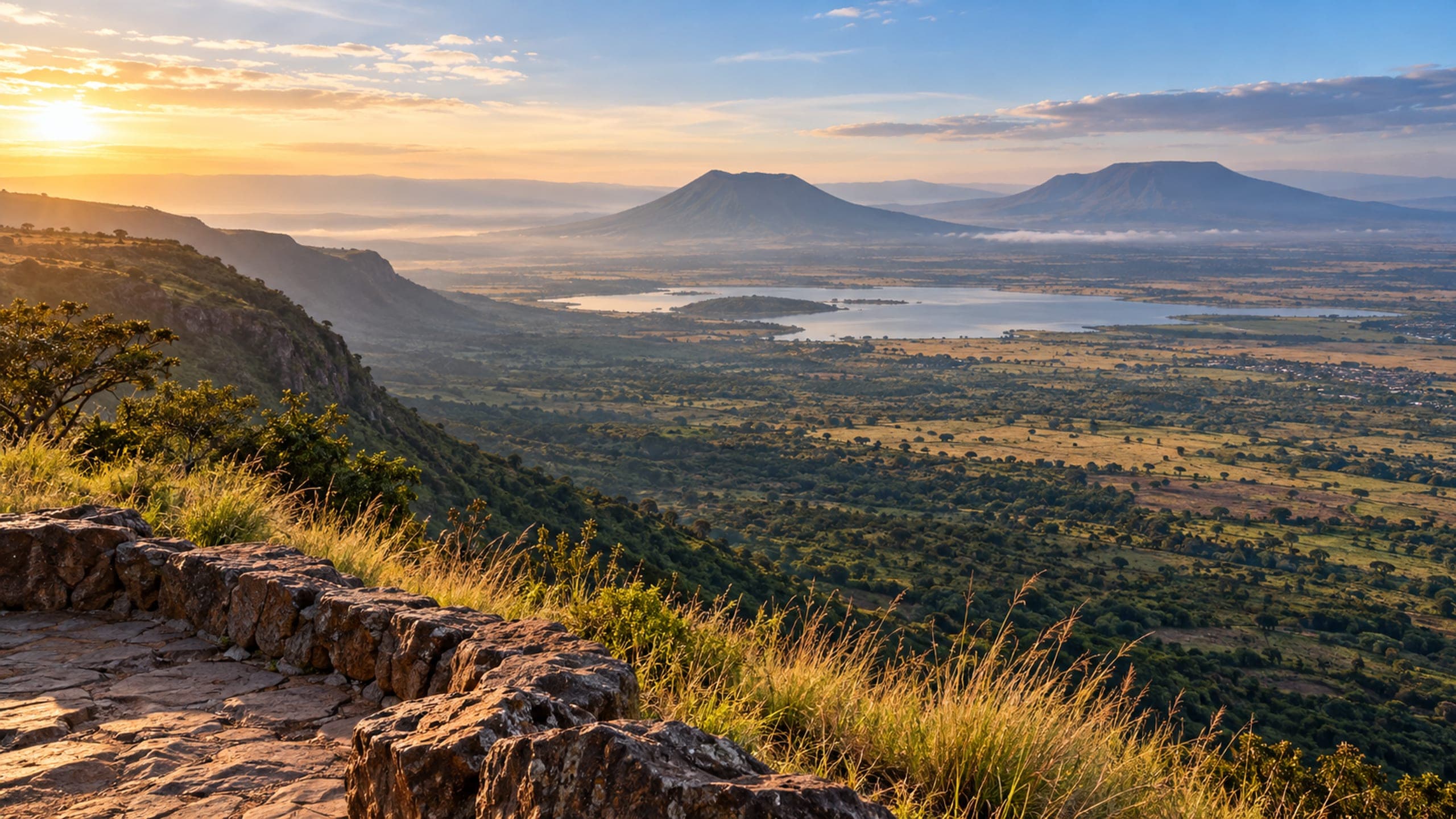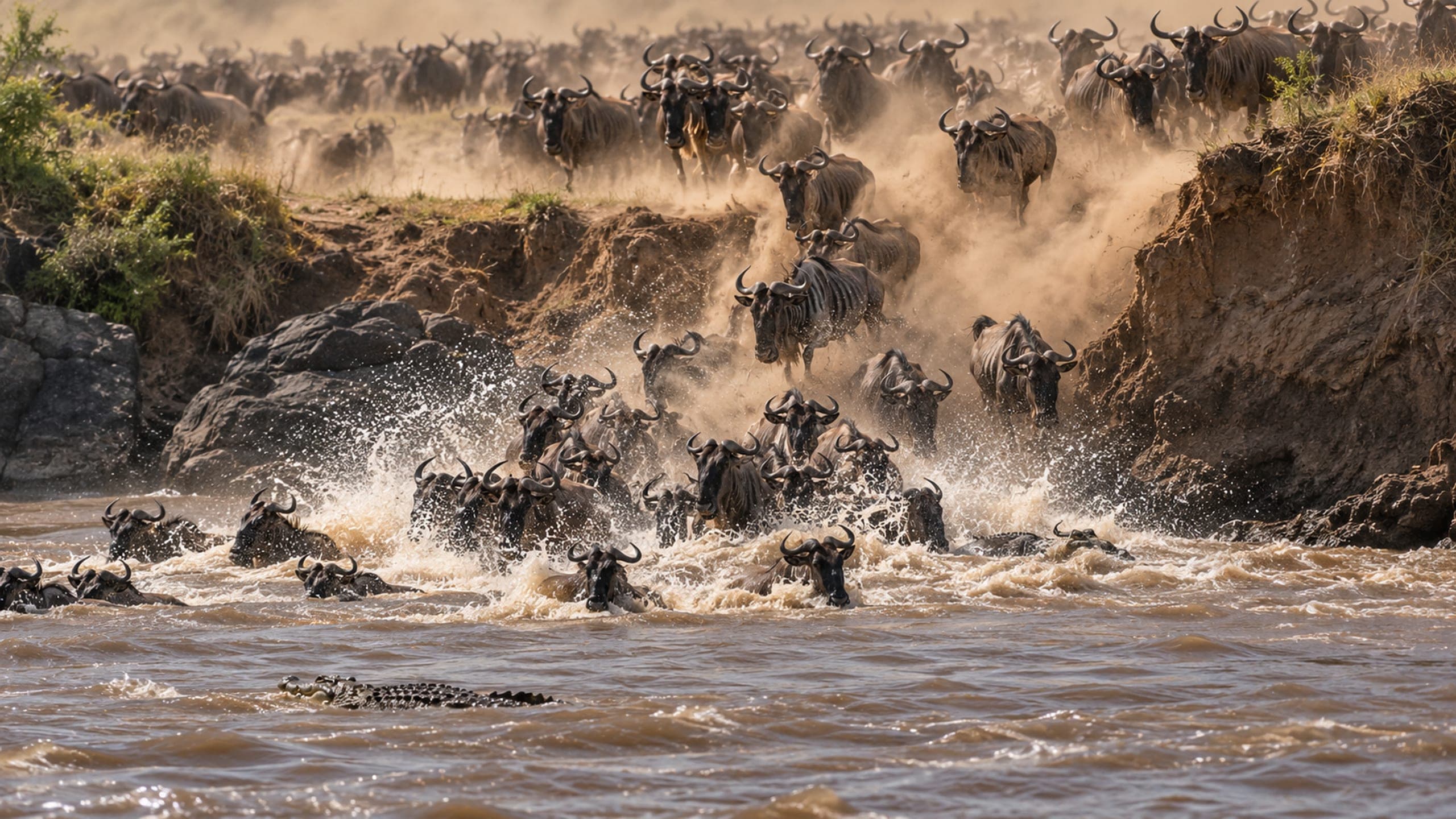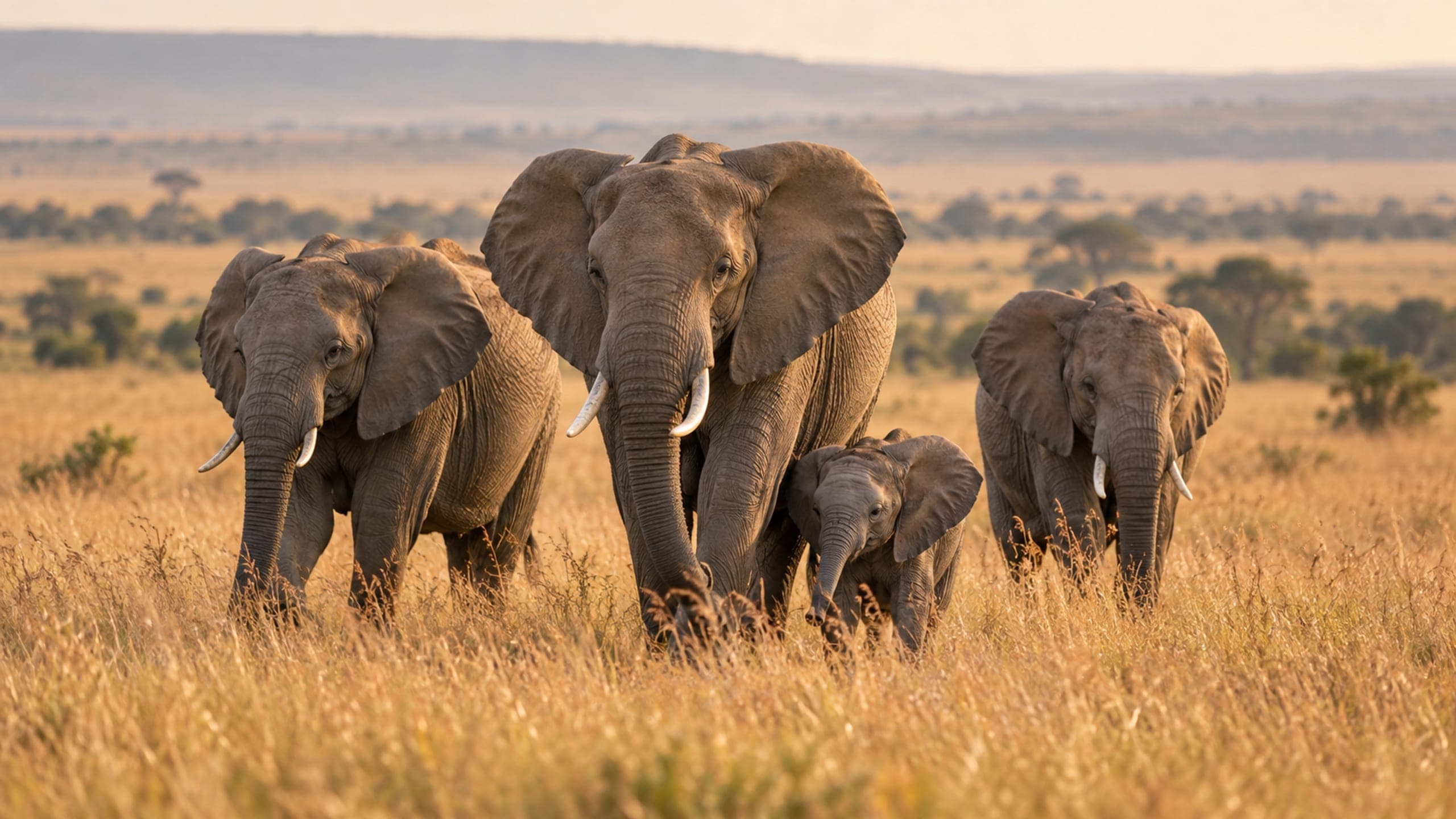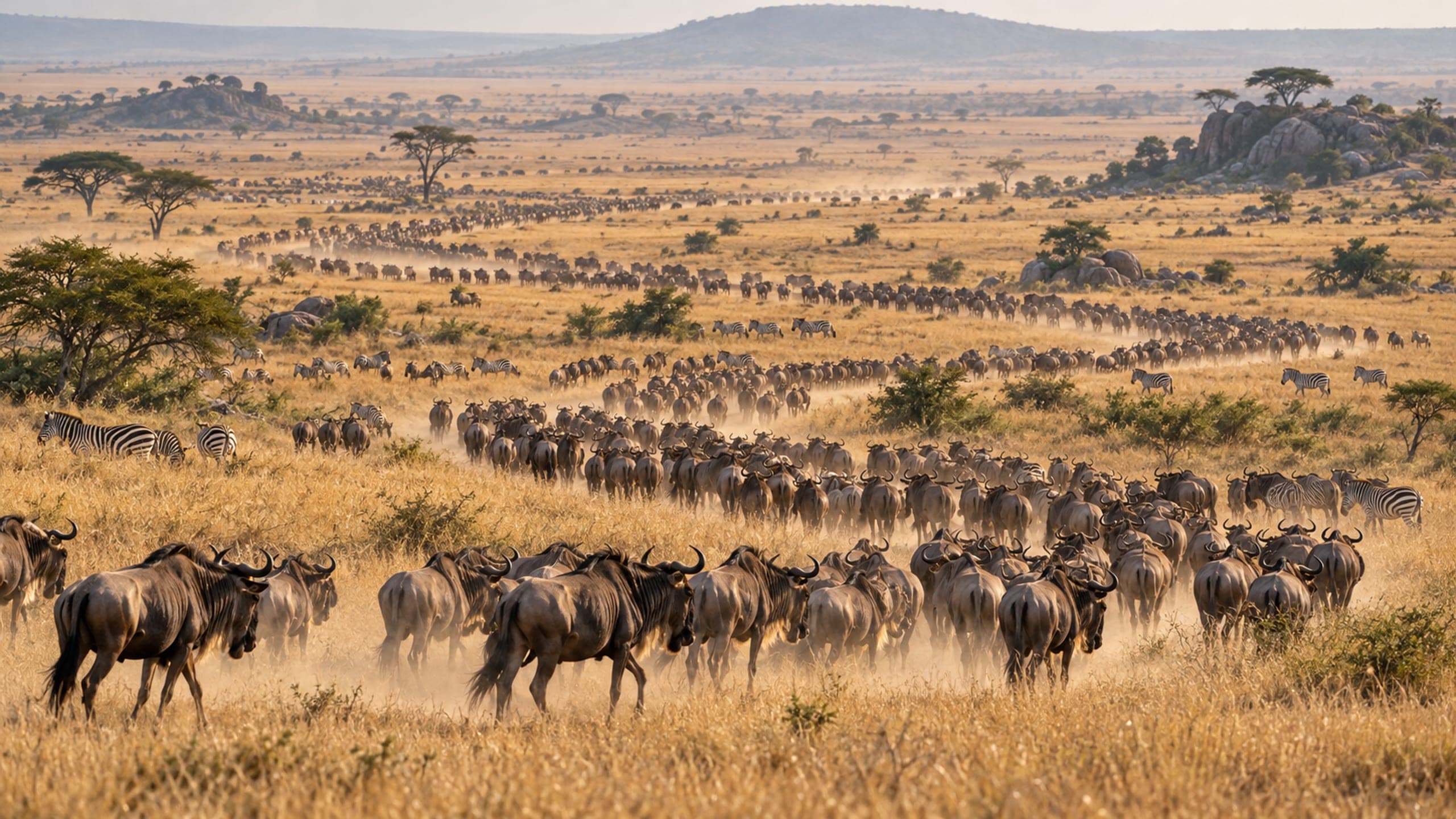
They're one ecosystem split by a border. The Maasai Mara is compact, wildlife-dense and easy to reach from Nairobi. The Serengeti is vast, wild and pairs perfectly with the Ngorongoro Crater. Here's an honest side-by-side to help you choose.
The question isn't really which park is better. The Maasai Mara and the Serengeti are two halves of one ecosystem, divided by the Kenya–Tanzania border. The wildebeest don't know which country they're in, and the lions certainly don't. What differs is the scale, the season, the logistics and the feel of the trip. We run safaris in both, so here's the comparison we give our own guests.
The side-by-side comparison
| At a glance | Maasai Mara · Kenya | Serengeti · Tanzania |
|---|---|---|
| Size | About 1,510 km² of reserve, plus the conservancies around it | About 14,750 km², roughly ten times larger |
| Best months | July – October (migration), January – February | All year, by region: south Jan – Mar, west Jun, north Jul – Oct |
| Getting there | 5–6 hrs by road from Nairobi, or about an hour by air | 8+ hrs by road from Arusha, or a light-aircraft flight |
| Wildlife density | Exceptional. Big cats are seen daily in a small area | Excellent, but spread over a far larger area |
| Crowds | Busy at crossing points in peak season; conservancies are very quiet | Busy around Seronera; remote areas feel empty |
| Park fees (adult, per day) | $100 Jan – Jun, $200 Jul – Dec | About $83, plus a nightly concession fee |
| Best combined with | Amboseli, Lake Nakuru, Diani, Lamu | Ngorongoro Crater, Tarangire, Zanzibar |
| Ideal trip length | 3 – 5 nights | 4 – 6 nights, plus 2 nights for Ngorongoro |
Why the Maasai Mara is so special
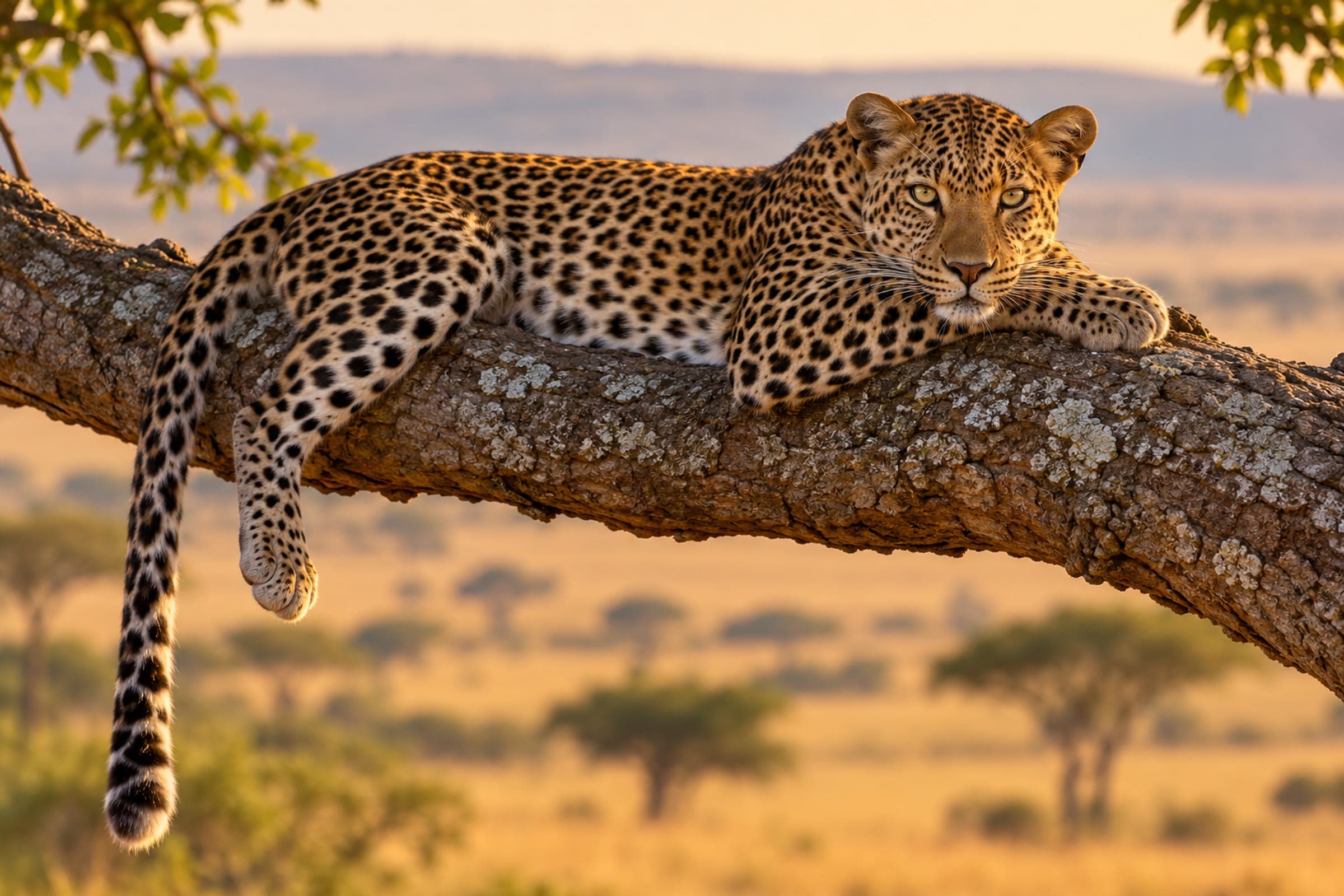
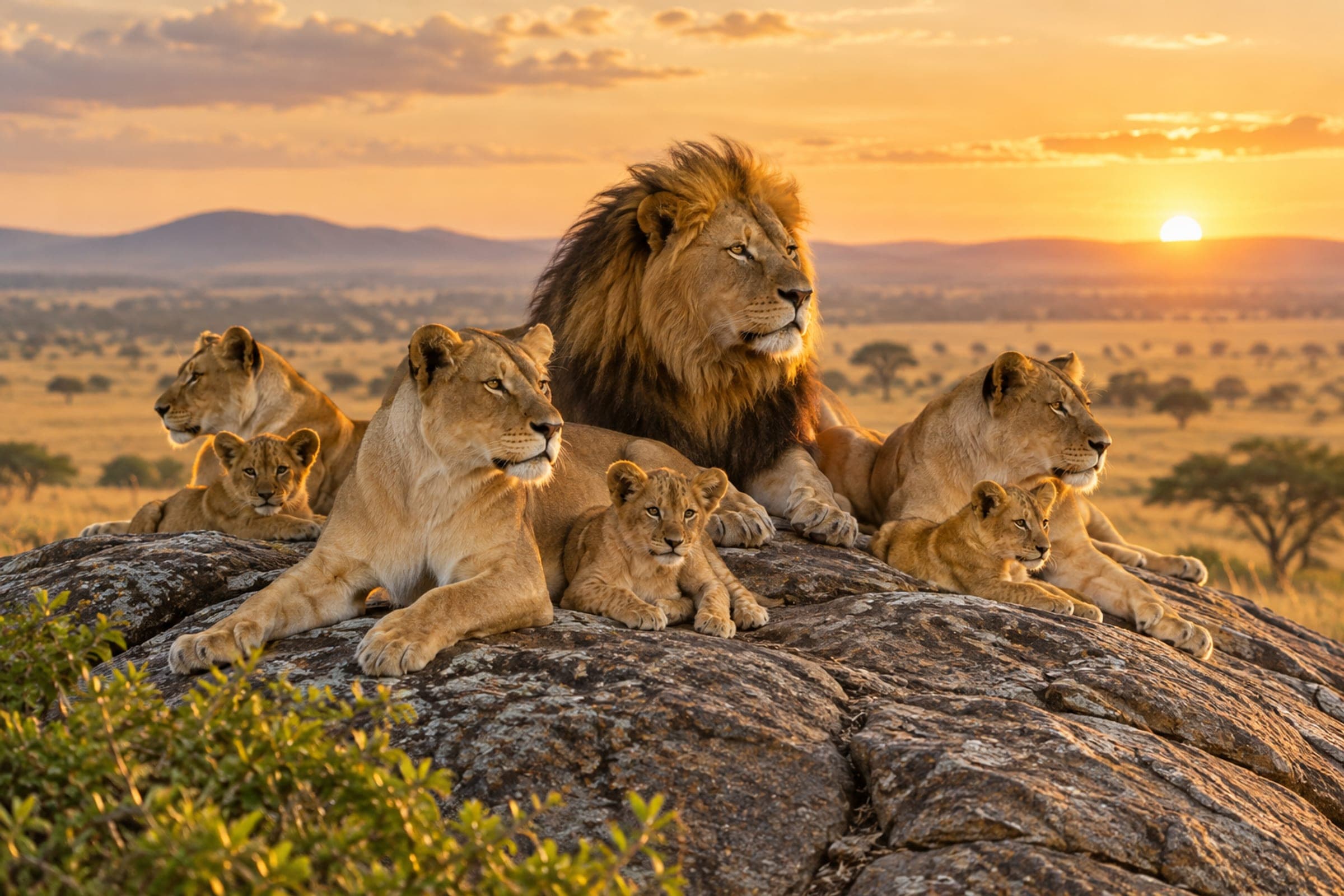
The Mara is small, rich and crowded with wildlife. Rolling grassland is cut by the Mara and Talek rivers, with acacia on the ridges and riverine forest along the banks. Lion prides are large and confident. Cheetahs hunt on open plains in daylight. Leopards lie up in the river forest. You don't need to drive for hours to find something remarkable, because something remarkable is usually around the next bend.
Around the reserve sits a ring of private conservancies on Maasai land: Naboisho, Olare Motorogi, Mara North, Ol Kinyei and others. They limit the number of vehicles, allow off-road driving, night drives and guided walks, and pay land lease fees directly to Maasai landowners. A night or two in a conservancy alongside the main reserve is one of the best combinations in African safari.
You can be on a game drive the same afternoon you leave Nairobi, which makes the Mara perfect for shorter trips.
The Mara has some of Africa's highest densities of lion, cheetah and leopard, and they don't leave when the migration does.
From January to June the reserve fee is $100 per day and lodges offer lower rates, so a Mara safari is excellent value.
Why the Serengeti is so special
The Serengeti's name comes from the Maa word for 'endless plains', and when you're standing in the south during calving season it feels exactly that. It's huge, and that scale is its gift. The migration can be found somewhere in the Serengeti in every month of the year, and its remote northern and western areas can feel completely empty.
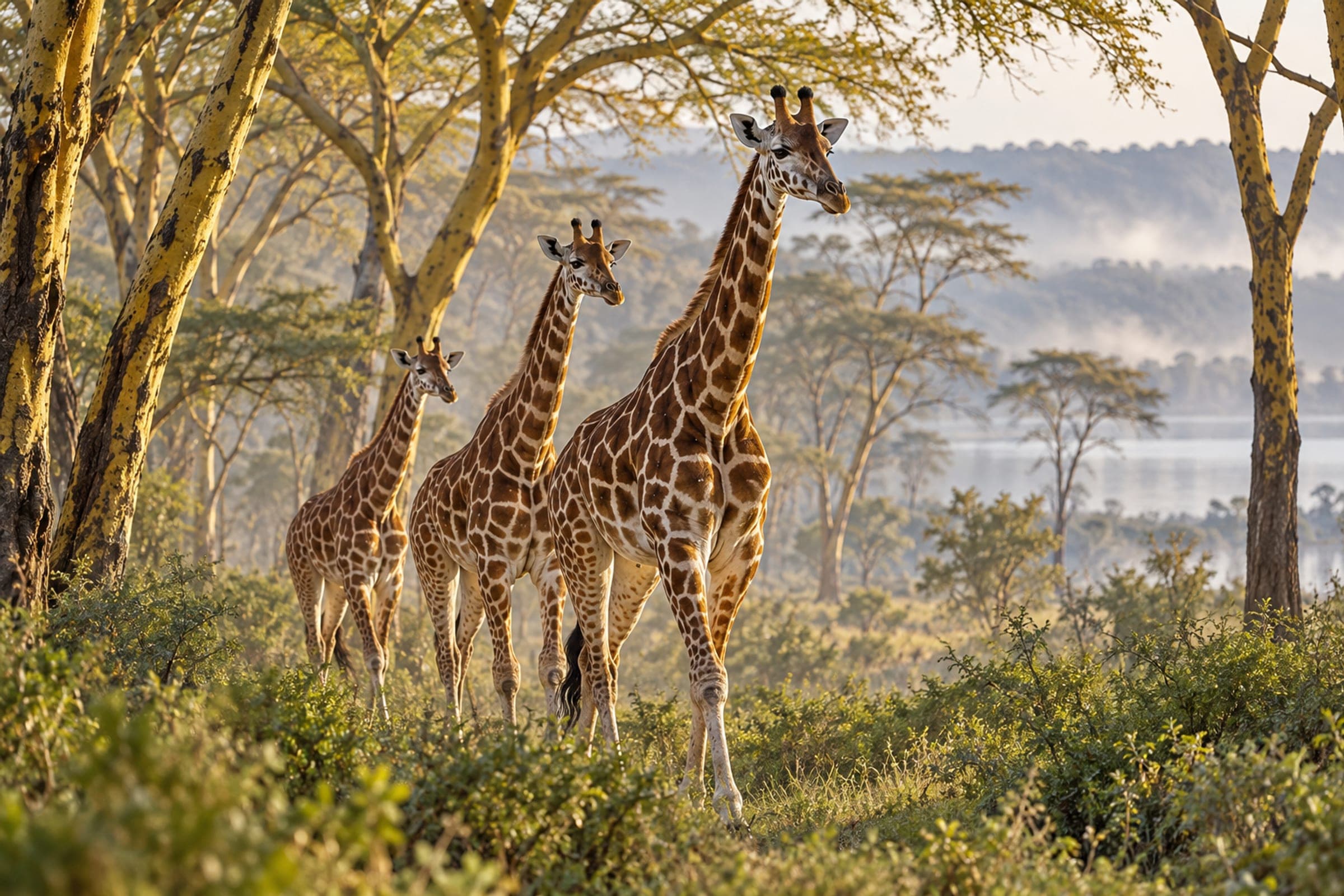
Most importantly, the Serengeti sits at the heart of Tanzania's Northern Circuit. You can combine it with the Ngorongoro Crater, a collapsed volcano with a 260 km² floor full of wildlife (and one of the best places in East Africa to see black rhino), and with the baobabs and elephant herds of Tarangire.
From calving at Ndutu in February to the Mara River in August, the herds are somewhere in the Serengeti every month.
A descent into the crater is one of the great safari days. The vehicle fee is $295 per descent, and it's worth it.
Fly from the Serengeti or Arusha to Zanzibar for white beaches and Stone Town. It's the classic Tanzanian ending.
Which one is right for your trip?
- You're travelling between July and October
- You have a week or less in East Africa
- You want big cat sightings almost every day
- You'd like to add Amboseli's elephants or Kenya's coast
- You want the best value for a classic safari
- You're travelling between December and March (calving)
- You have eight days or more
- You want space, scale and remoteness
- You'd love to see the Ngorongoro Crater
- You'd like to finish in Zanzibar
How we'd plan each one
Frequently asked questions
Is the Maasai Mara better than the Serengeti?
Neither is better overall. They're two parts of the same ecosystem. The Maasai Mara is better for short trips, value and wildlife density, especially from July to October. The Serengeti is better for scale, remoteness and calving season from January to March, and for combining with the Ngorongoro Crater.
Can you see the Great Migration in both the Maasai Mara and the Serengeti?
Yes. The herds spend most of the year in the Serengeti and arrive in the Maasai Mara from about mid-July to October. River crossings happen on the Mara River in both the northern Serengeti and the Maasai Mara, peaking in August and September.
Can you drive from the Maasai Mara to the Serengeti?
Not directly. The border crossing between the two parks is closed to tourist traffic. To combine them you fly via Nairobi or Arusha, or make a long road transfer through the Namanga border post.
Which is cheaper, the Maasai Mara or the Serengeti?
A Maasai Mara safari is usually cheaper, because it's reachable by road from Nairobi and has a wide range of lodging. From January to June the Mara reserve fee is $100 per adult per day. The Serengeti charges about $83 per day plus a nightly concession fee, and most itineraries need internal flights.
How many days do you need in the Maasai Mara?
Three to four nights is ideal. That gives you at least two full days of game drives, time to follow the migration in peak season, and room for a balloon flight or a conservancy walk.