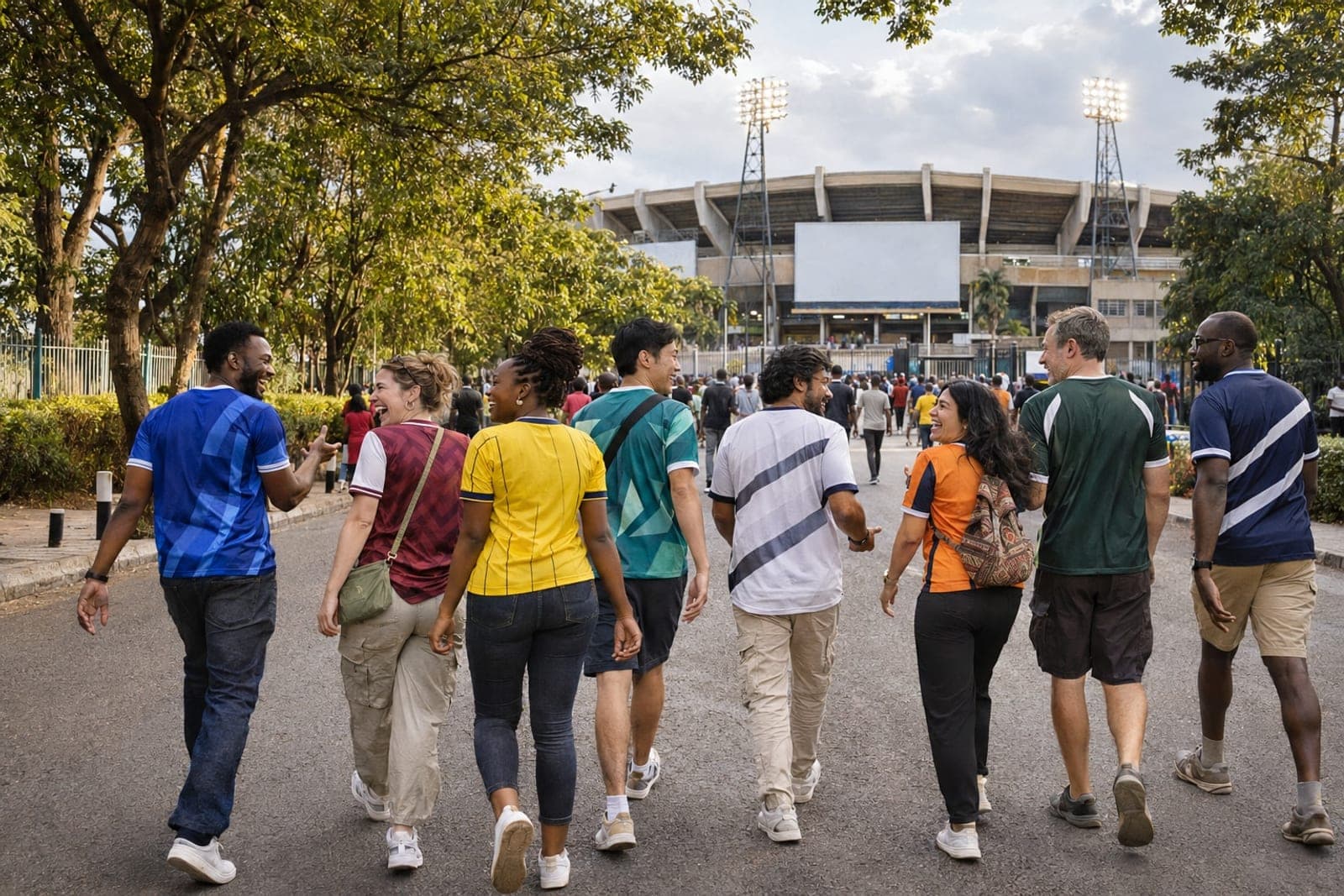
Everything you need to plan a trip to Kenya for the 2027 Africa Cup of Nations: tournament dates, the Nairobi venues, tickets, the eTA, June and July weather, where to stay, and how to turn a few matches into a safari and beach holiday.
For the first time, the Africa Cup of Nations is coming to East Africa, and for the first time ever it will be shared by three host countries. For football fans that means a month of matches. For anyone who has ever wanted to see a lion in the wild, it also means the best excuse they'll get to finally do it.
We're a safari company in Nairobi, so this guide is written from the ground. It covers what's confirmed, what isn't yet, and how to plan a trip that works whatever the fixture list ends up looking like.
AFCON 2027 at a glance
| Fact | Detail |
|---|---|
| Dates | 19 June – 17 July 2027 |
| Hosts | Kenya, Uganda and Tanzania (the joint "Pamoja" bid) |
| Teams | 24 |
| Kenya's venues | Talanta Stadium (60,000 seats, Ngong Road) and Moi International Sports Centre, Kasarani, both in Nairobi |
| Uganda's proposed venues | Mandela National Stadium (Namboole) in Kampala, plus new stadiums in Hoima and Lira |
| Tanzania's proposed venues | Benjamin Mkapa Stadium in Dar es Salaam, Arusha, and Amaan Stadium in Zanzibar |
| Still to be confirmed | The final venue list, which matches each city hosts, and kick-off times |
Where will AFCON 2027 matches be played in Kenya?
Kenya's games are planned for Nairobi. The headline venue is the new Talanta Stadium, a 60,000-seat arena built on the Jamhuri grounds off Ngong Road, south-west of the city centre. The second is the Moi International Sports Centre in Kasarani, Kenya's long-time national stadium, which sits off the Thika Superhighway north-east of the centre and is being upgraded for the tournament.
Both stadiums are inside the city, so a Nairobi hotel works as a base for either. The practical difference is traffic: the two are on opposite sides of town, and Nairobi traffic is serious. For more on that, read our Nairobi guide for AFCON fans.
How to get AFCON 2027 tickets
Only buy match tickets through official CAF channels. CAF hadn't announced its ticketing plans in November 2026, but at every big tournament fake tickets and "guaranteed" resale packages appear long before the real ones go on sale.
Getting to Kenya
Nairobi's Jomo Kenyatta International Airport (NBO) is the main gateway and one of the best-connected airports in Africa. Kenya Airways and British Airways fly direct from London, and there are easy one-stop connections through Europe, the Gulf, Istanbul and Addis Ababa. Most travellers from North America connect in Europe, the Middle East or Addis Ababa.
Fans following a team across the region can fly between Nairobi, Entebbe (for Kampala), Dar es Salaam and Zanzibar in roughly an hour or two. Flights fill fast at tournament time, so book these legs as soon as fixtures are known.
Do I need a visa for Kenya?
Most visitors don't need a traditional visa, but they do need an Electronic Travel Authorisation (eTA), applied for online at etakenya.go.ke before you travel. A standard single-entry eTA costs $30. You'll also need:
- a passport valid for at least six months after you arrive;
- since October 2026, proof of travel health insurance that meets Kenya's minimum cover;
- a yellow fever certificate only if you're arriving from, or through, a yellow fever risk country.
Citizens of the East African Community and most African countries are exempt from the eTA, which matters for many travelling supporters. Every traveller needs their own eTA, children included. Our Kenya entry requirements guide has the full, current detail.
What's the weather like in June and July?
Cooler than most people expect. Nairobi sits at about 1,700 metres, and June and July are its coolest months: pleasant, often cloudy days in the low twenties Celsius, and chilly evenings that can drop to around 10–12°C. Bring a warm layer for evening matches.
It's the long dry season across the safari parks, which is why the timing is so good. Mornings on a game drive can be cold, and the middle of the day is warm and sunny. The coast is warm and breezy, in the high twenties, with the odd passing shower.
Mild days, cool nights. A jacket for the stadium, and comfortable shoes for getting in and out.
Dry, clear and excellent for wildlife. Cold at dawn; layers you can peel off by mid-morning.
Warm sea, steady breeze, sunshine with occasional showers. Perfect after a week of early starts.
Why AFCON is perfect timing for a safari
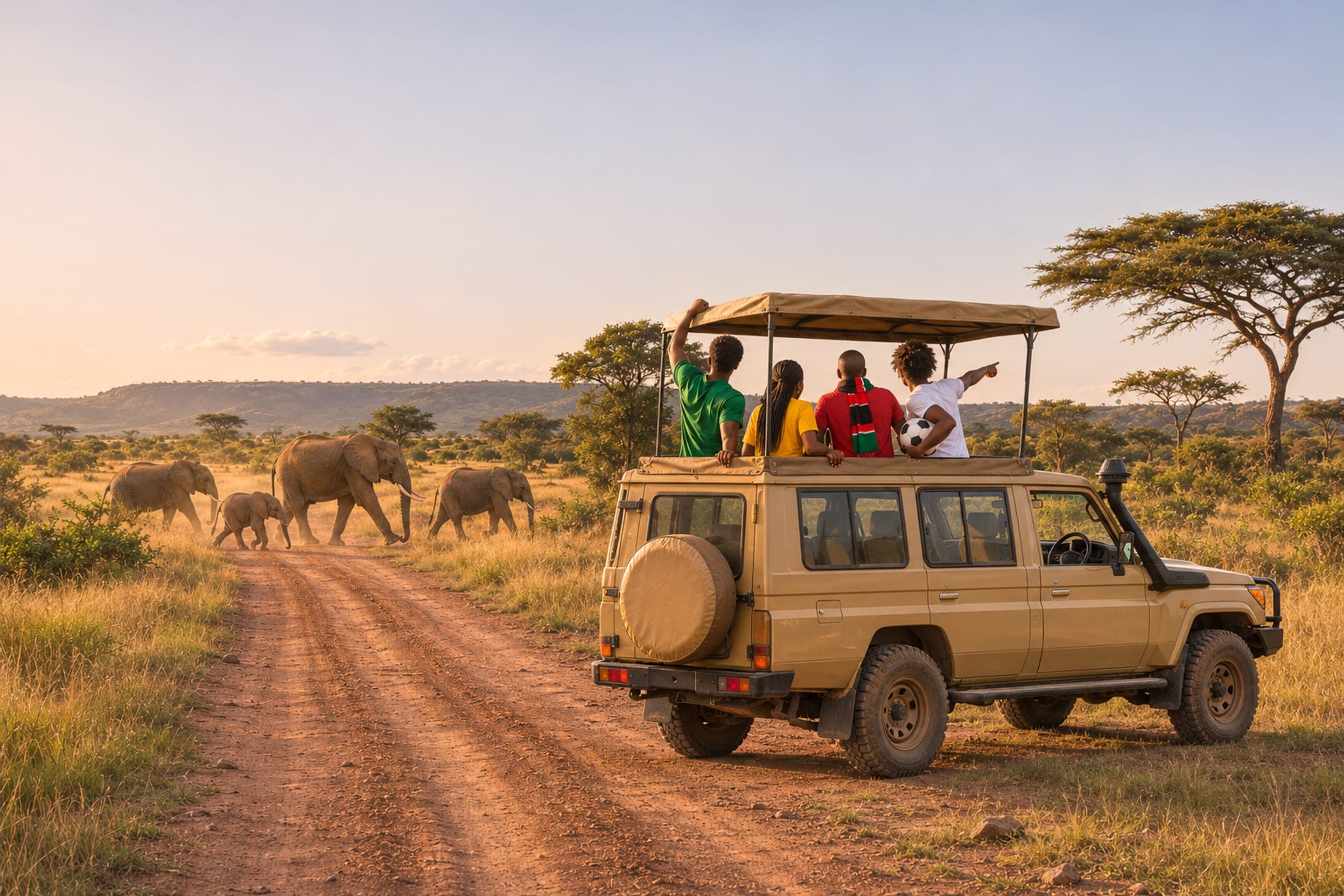
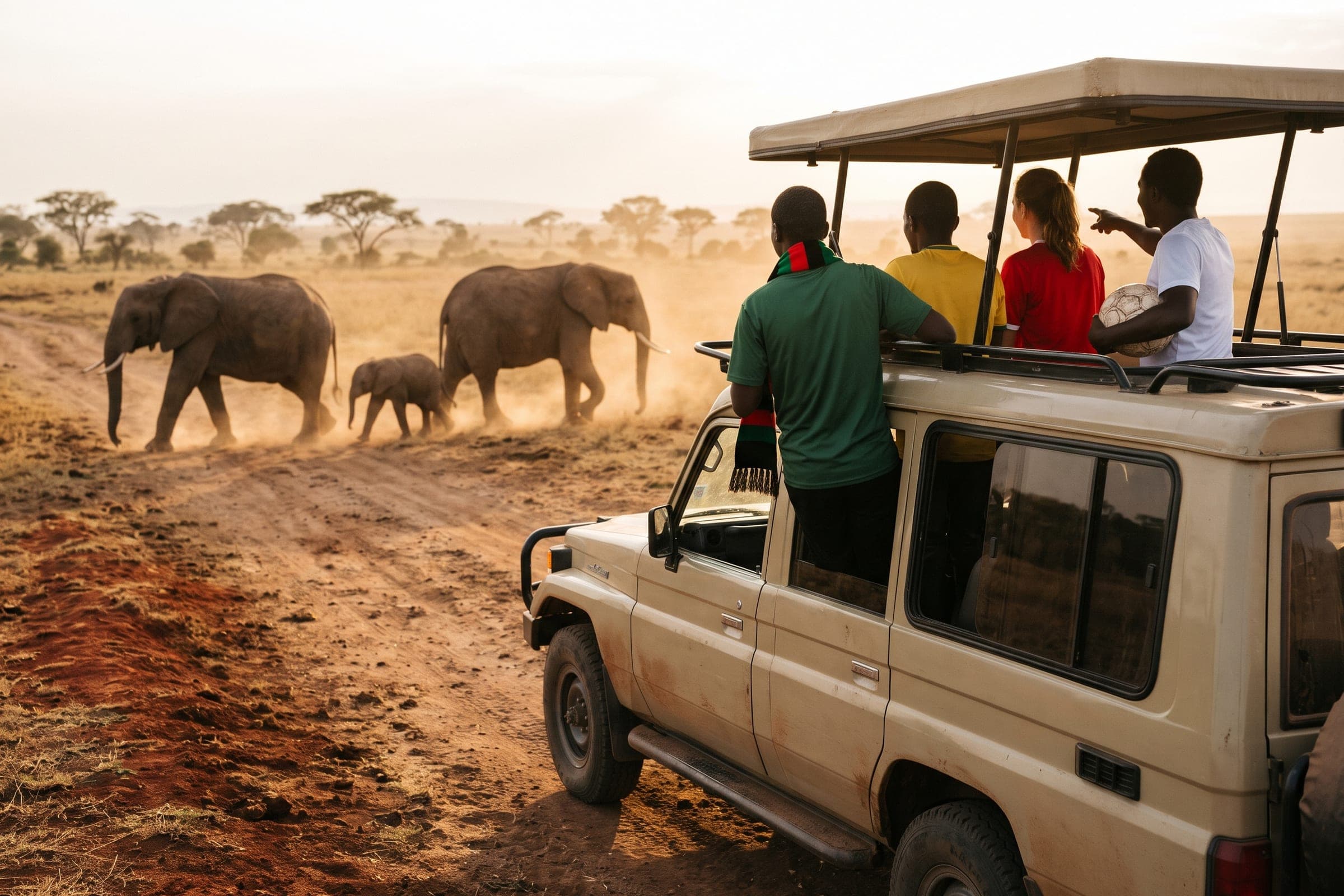
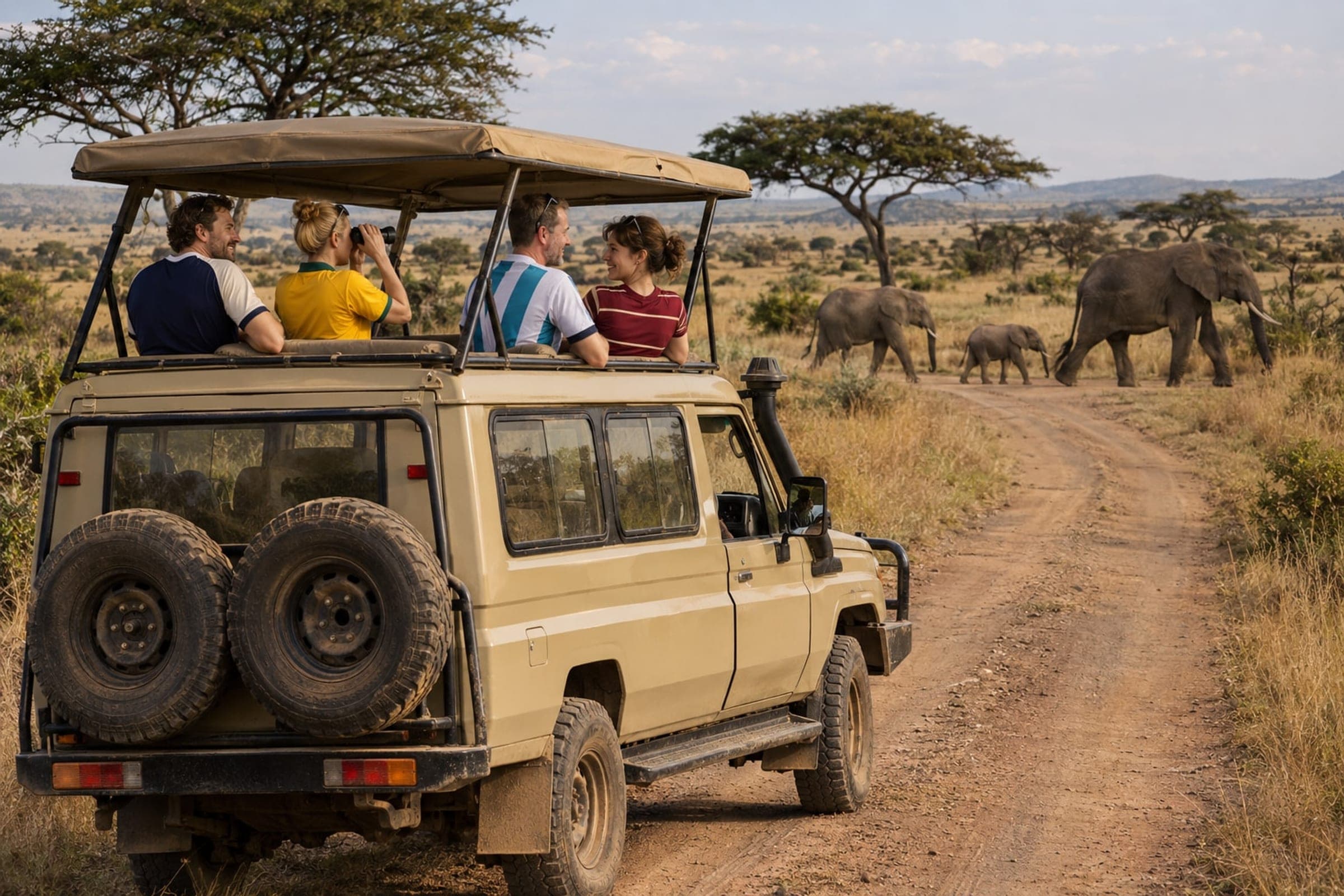
AFCON 2027 lands in Kenya's best safari season. From late June the grass shortens and animals gather near water, so they're easier to find. From about mid-July, the herds of the Great Migration start pouring into the Maasai Mara from Tanzania, right as the tournament reaches its knockout rounds and final.
There's also a money point. The Maasai Mara reserve fee for non-residents is $100 per adult per day until 30 June, and $200 from 1 July. A fan who goes on safari in the group stage, or between early matches, pays half the park fee of someone arriving in late July.
Football first, safari after the final, beach to finish. If you can stretch your trip by a week, that's the plan we'd make for ourselves.
Our planners in Nairobi
Read more in how to combine AFCON 2027 with a Kenya safari, including what you can fit into a two- or three-day gap between matches.
Adding the beach
After the matches and the Mara, nothing beats a few days on the Indian Ocean. Diani Beach, south of Mombasa, has long white sand, warm water and plenty of places to stay. You can fly to the coast from Nairobi or straight from the Mara on light aircraft. Watamu, Malindi and Lamu are good alternatives if you want somewhere quieter or more historic.
Where to stay in Nairobi during AFCON
Pick your area by how you want to spend your days, not just by distance to the stadium. Westlands and Kilimani suit fans who want restaurants and nightlife. Karen is green and quiet, and close to Nairobi National Park and the Giraffe Centre. Upper Hill and the city centre are handy for Talanta Stadium. Hotels will fill and prices will rise around matchdays, so book early, and choose a cancellation policy that fits an unconfirmed fixture list.
Money, phones and staying safe
- Money: the currency is the Kenyan shilling (KES). Cards work in most hotels, restaurants and malls. Kenya also runs on M-Pesa mobile money, which visitors can use with a local SIM.
- Phone: a local SIM is cheap and easy to buy at the airport with your passport, and it makes ride-hailing and WhatsApp simple.
- Safety: Kenya welcomes millions of visitors and the safari areas are well run. In Nairobi, take the usual big-city care with phones and wallets, especially in crowds around stadiums, and use ride-hailing apps or arranged transfers at night. Our guide to whether Kenya is safe for tourists goes into detail.
Our AFCON 2027 Kenya packages
We've built three sample itineraries that combine matchday in Nairobi with the Maasai Mara and the coast. They're starting points: we rebuild every one around your fixtures, dates and budget.
When should I book?
Now, or as soon as you're sure you're going. The tournament overlaps with Kenya's peak safari season, and the most popular camps in the Mara often fill 9 to 12 months ahead. Start with flexible bookings, then fix the details once fixtures are published.
Frequently asked questions
When is AFCON 2027?
AFCON 2027 is scheduled from 19 June to 17 July 2027, co-hosted by Kenya, Uganda and Tanzania. Check official CAF announcements for the latest fixtures and venues.
Which stadiums will host AFCON 2027 matches in Kenya?
Kenya's matches are planned for Nairobi, at the new 60,000-seat Talanta Stadium on Ngong Road and the Moi International Sports Centre in Kasarani. As of November 2026, CAF had not published the final venue list or match allocation.
Do I need a visa to go to Kenya for AFCON 2027?
Most visitors need an Electronic Travel Authorisation (eTA), applied for online before travel. Citizens of East African Community countries and most African countries are exempt. You also need a passport valid for six months and, since October 2026, proof of travel health insurance.
Is June or July a good time for a safari in Kenya?
Yes. It is the long dry season and prime safari time. The Great Migration usually starts arriving in the Maasai Mara from about mid-July. The Mara reserve fee doubles from $100 to $200 per adult per day on 1 July, so safari days in late June cost less.
Where can I buy AFCON 2027 tickets?
Only through official CAF channels. Be wary of anyone selling guaranteed tickets before official sales open. Creeks Tours & Travel does not sell match tickets.
What is the weather like in Nairobi in June and July?
Mild and often cloudy, with daytime highs in the low twenties Celsius and cool evenings around 10–12°C. Bring a warm layer for evening matches.